
Death meditation
An exercise in becoming who you have the potential to be

I responded briefly to a note from Paul Musso, PhD recently that referred to Kierkegaard’s take on death. In my response I alluded to death meditation. This is a process I have practiced and supported others in practicing. It draws inspiration in ways from approaches like Functional Imagery Training (FIT), but instead of supporting free throws, public speaking or going into space (yes, astronauts use FIT), this multi-modal exercise supports a person in imagining the process of their death—or the death of significant others—using the entirety of their imaginative prowess. We’re working with imagery, smell, taste, touch, movement, affect, the works. Ultimately it is an attempt to truly be with what it is like to say our final goodbye.
Who might we be in that moment? What might we say? Who will be there with us? What might we confess? What fears will we finally ‘shed’? What games will no longer be relevant? Will we have regrets? What might they be? How might we relate to them?
The last time I did this activity I had a quiet afternoon in the sun. I sat out on the rooftop, put my noise cancelling headphones on and engaged in a multi-stage process.
Today’s focus… my immediate family. My core unit; my life partner Esther, my daughter Asta and my dog Nala.
I began by imagining the passing of Nala. It was a beautiful yet tragically gut wrenching experience. I was there with Esther and Asta. We held space for what felt like infinite love, what felt like hours (but was probably more like 15 minutes or so). We spoke but the words themselves didn’t matter much. What mattered was our presence, care, gratitude and the love that was so clearly directed at Nala. Love that was so clearly reciprocated.
What remained, after the freakishly powerful experience of saying goodbye, was a huge fucking hole of sadness; love that no longer had a clear directional focus due to her passing. Grief is sometimes described as love that has nowhere to go.
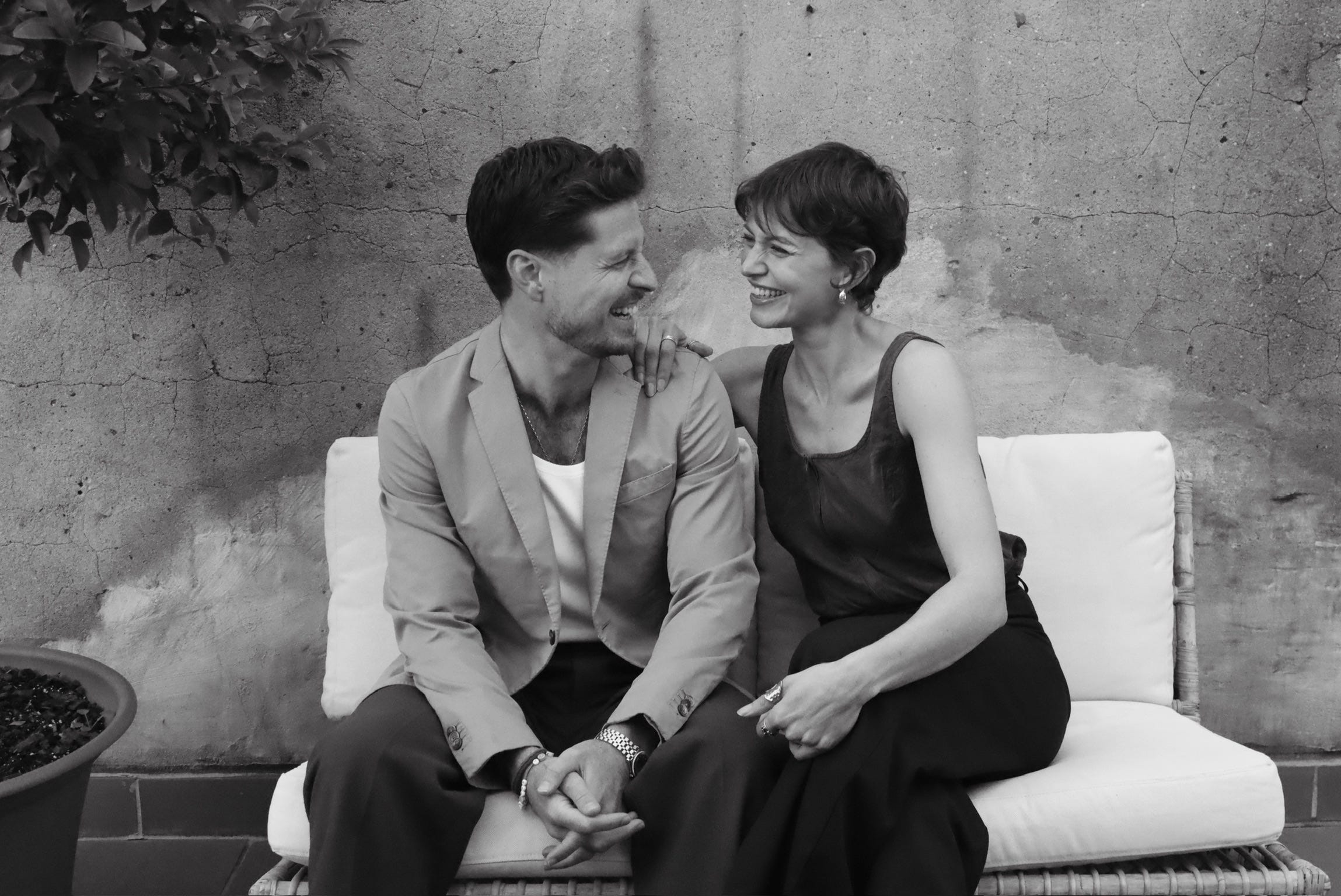
I then imagined Esther’s death. I laid by her side. Holding her in the most beautiful embrace I could possibly imagine. I said everything. Everything. So did she. We shared space with others we loved, including Asta, who was now a mature adult; having grown so fully into her very own unique expression of life. We kissed. And we just stayed there. Eyes to eyes. Nose to nose. Lips to lips. Love to love. More gratitude than I could have ever imagined possible thanks to an entire life filled with so much love. So much fun. So much commitment. So much playfulness. So much everything. This may not hit home for you but there’s one person who knows exactly what I am saying and feeling. Then, finally, she too passed. The depth of emotion I was feeling in this moment felt like fucking dying*. I honestly can’t even describe how powerful this was. It. Felt. So. Real. So real.
*this is not about creating a hierarchy of care in any way. I love these three beings with the entirety of my heart. Each relational field expresses a unique quality of love.
Even writing this now, my entire body is deeply affected by this memory. I am writing this on a plane. Glasses on. Tears flowing. No tissues in sight. We are only just ascending. I’ll head to the bathroom soon.
This experience honestly felt so real. It was outrageous. Genuinely outrageous.
Okay, I then imagined Asta passing. Not as she is now and not even as the mature adult I referenced a moment ago. She was old. She had lived a full life. I just somehow managed to be there to experience the real end. This is the beauty of the imagination.
Interlude… I’ve just realised I am still listening to Jamiroquai. Somehow, as soon as I began writing, the music, the funky, soulful, upbeat tracks I was previously vibing to, no longer held the power they previously held. The musicality was supplanted with a different focus.
This process of saying goodbye to my daughter… what can I even say? As a parent you know. You know exactly what I’m feeling. Even the conscious thought triggers the body. Why would I deliberately, with the entirety of my imaginative faculty, engage with such a tragedy?
I’ll get to that later.
This process was beautiful. I got to experience the existential gratitude of hearing my daughter tell stories about her life. We laughed. We cried. We cuddled. I held her in a way that somehow felt resonant with her first moments of life. That incredible young being who had taken an arduous, 9 month journey to arrive. She actually entered the world with one arm by her side, raised as if she was flying like superwoman. This is something we often joke about. She truly is incredible. We got to experience the entire cycle. Birth, life, so much life, then death.
After some time, perhaps a good 25 minutes (the whole session took about two hours), she passed. She was gone.
That death feeling again. That pain that hurts so deep you cannot believe we have the capacity to hold it, to be with it.
It was as if the light of life itself had been eradicated. Not violently but inevitably.
Why am I doing this?
We will get there.
Finally, my turn.
I am lying down. I am looking out as if from my own eyes. I see the people I love. They are all there; Esther, Asta, Nala. All there with me.
It wasn’t clear how much time was passing through this experience until after. All I knew is that I was experiencing something profound (yes, that word existed before LLMs… do LLMs catch planes, cry next to the window and need to go to the bathroom to get tissues? No they do not. That’s how I know I am writing this. From the heart. On my phone without assistance. So if I get stuck I sit with the difficulty. I allow the discomfort. I learn through the process. My way of being is clarified through the cognitive process that is writing. I’ll say plenty more about all this in future posts. Oh, and I understand that many things extend our cognition. At least I think I do…? But LLMs are a very different type of phenomena than a pen. That’s for another post).
We talked. We laughed. We cried. I shared lessons learned. We reminisced. We allowed our memories to take us on a magic carpet kind of ride through our shared timeline. We got to see the whole thing, the gestalt if you will.
I then expressed. Everything fucking thing I felt. Every thing.
I was heaved over at this point actually. My body almost convulsing. I could feel the moment approaching. The goodbye. It was arriving.
As it arrived, I drifted off somewhat gracefully. I wasn’t grasping. I allowed.
Then I opened my eyes. Well, I tried to. There was more salty liquid floating around than you’d usually have to contend with.
The world flooded in. The sun shone from behind my back. I felt the warmth on my back. The wind blew, gracing my skin and hair with its wonderful presence. The city sounds did what they do. Mental. Beep, yell, chatter, screech, big ass plane overhead. The birds flew above. The clouds passed. The world kept on turning. Same-same but different.
I had changed. I am always changing. Always. But in doing this, in enacting this process as an act of self care, I had changed in ways that I could only subtly feel but not yet fully acknowledge.
This brings me back to why I, or you, might do such a thing.
As Kierkegaard suggested, we can only really understand life by looking back. This looking back from deaths door is often described as a transcendental type experience. People soften. They forgive. They confess. As David Whyte suggests, the person who dies is not me. Not you. But some other person. Some person I always had the potential to be. Some less encumbered person. A lighter person. A clearer person. A more courageous person.
So, I ask, why wait for your final day? What if, through our incredible ability to inhabit past, present and possible all at once, we can begin becoming who we always had the potential to be? What if this activity, perhaps done at semi-frequent intervals, was capable of offering us something unique; something we could carry with us through the days of our life?
It’s my hypothesis that this can. This is why I do it. And this I why I encourage you to do the same.
With φιλία (philía),
Nate
Thanks for sharing this Nate. What you have written here is very powerful. I am struck by how human beings have an incredible ability to alter their state of consciousness through the power of imagination. The practice that you have done is, no doubt, a very important one that millions could benefit from as they are living in a tense relationship to the existential realities of life.